

Talesha Payne, MA, MBA, AMFT | Founder & CEO, Innovative Health & Housing Solutions
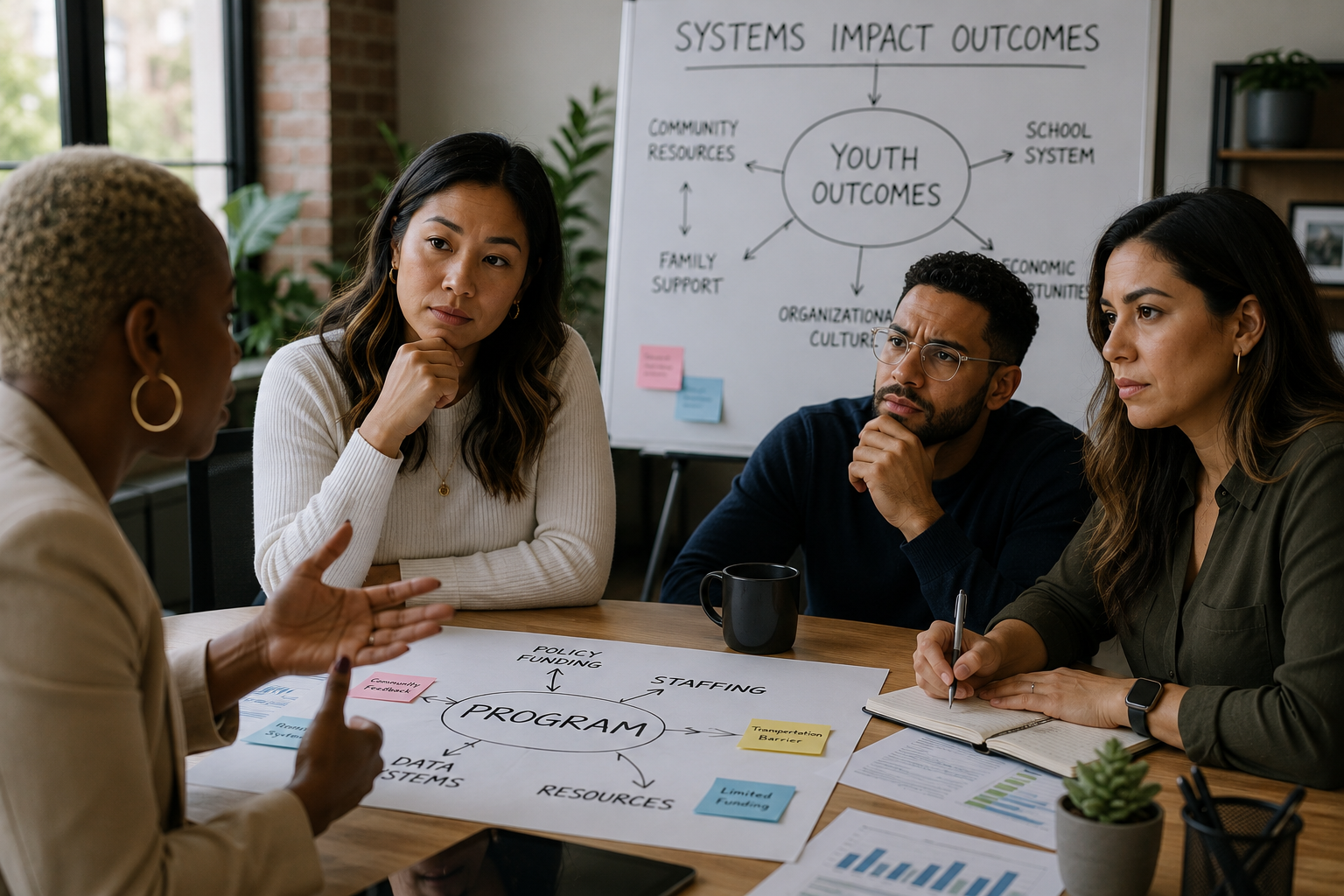
When an organization is struggling, the natural response is often to focus on the program. Change the workflow. Rewrite the policy. Add another training. Hire another person. Create another committee. Any of those interventions may be appropriate. But sometimes the program is not the real problem. In many cases, the real challenge is the system around the program: the structure, communication, leadership practices, resources, and decision-making processes that determine whether good work can actually succeed.
Good People Can Struggle Inside Poor Systems
Organizations are filled with talented people who genuinely care about their work. Commitment, however, cannot indefinitely overcome unclear expectations, disconnected departments, inconsistent processes, inadequate infrastructure, poor communication, or leadership teams that spend most of their time responding to emergencies. Eventually, strong employees become frustrated. Managers become overwhelmed. Programs become reactive. Turnover increases. Leaders start addressing individual symptoms while the underlying operational problem remains. That is when organizations have to look beyond individual performance and examine the environment in which people are being asked to perform.
Ask Why It Keeps Happening
When IHHS works with organizations, we are interested not only in what is going wrong, but why the same problem continues to return. Where are decisions getting stuck? Do people understand who owns what? Does the program model reflect the population being served today? Are departments working toward the same outcomes? Are leaders receiving useful information or simply more information? Do policies match actual practice? What are frontline employees seeing that executives may not be seeing? Those questions often reveal how an organization actually operates, which can be very different from what appears on an organizational chart.
Strategy Has to Reach the Front Line
A strategic plan sitting on a shelf does not change an organization. Neither does a beautifully written mission statement. Strategy becomes meaningful when employees understand their role in it, managers can operationalize it, leaders can measure it, and the people being served can experience the difference.
IHHS approaches organizational strategy by listening first, identifying what is already working, naming what is not, and helping leadership build the infrastructure needed to move forward. Sometimes an organization needs a new strategy. Sometimes it needs stronger operations. And sometimes it already has the right people and the right vision but needs a better system around them. Knowing the difference is where the real work begins.
Executive Commentary
One of the hardest responsibilities of leadership is being willing to look beyond the immediate problem. It is easy to change a process or replace a person; it is much harder to examine whether the organization itself is creating the conditions for people to succeed. At IHHS, we believe sustainable improvement begins with that level of honesty.